
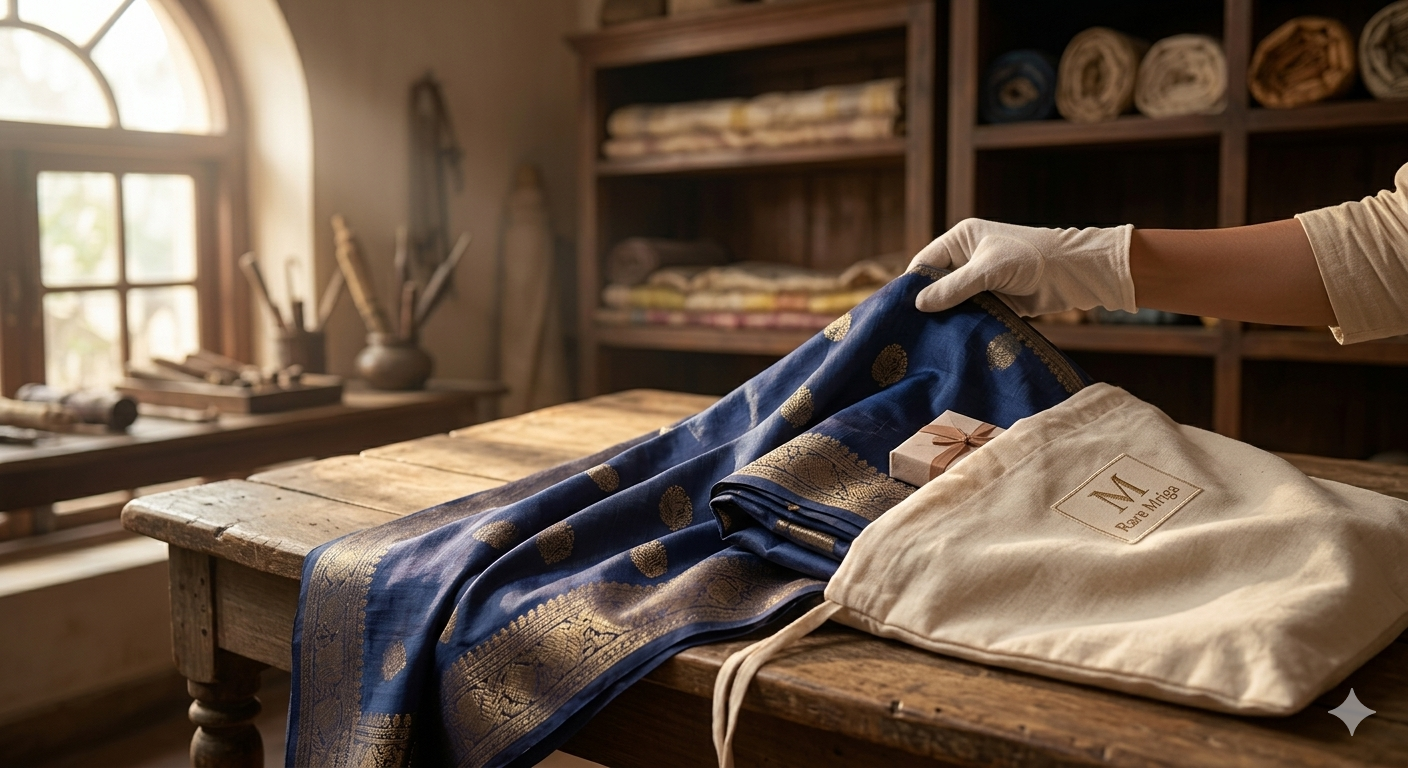
The Philosophy of an Heirloom
A Rare Mriga saree is not just a garment; it is a piece of art that breathes. Unlike fast-fashion polyester, pure mulberry silk is a natural protein fiber. If treated with respect, it will not just last your lifetime, but will be worn by your granddaughter.
The Storage Protocol
-
The Muslin Shield: Never store a pure silk saree in plastic covers. Plastic traps moisture and emits chemicals that can cause "sweating" in the fabric, leading to fungal growth. Use unbleached muslin bags.
-
The Refolding Ritual: Every 3–4 months, take your heavy Zari sarees out. Air them in a shaded room for 2 hours. When refolding, change the crease lines. If a saree stays folded the same way for years, the silk fibers will break at the crease (known as "cutting").
-
The Cedar Secret: Avoid naphthalene balls; they tarnish real silver zari. Instead, use dried neem leaves or small cedar blocks wrapped in cotton.
The Emergency Stain Guide
If you spill wine or curry at a wedding, do not rub. Blot the area with a dry white cloth to absorb excess liquid. Take it to a heritage dry-cleaning specialist immediately. Never use water on handloom silk at home, as it will cause the fibers to swell and lose their natural luster.
Share:
Real Zari vs. Tested Zari: The Investment Guide